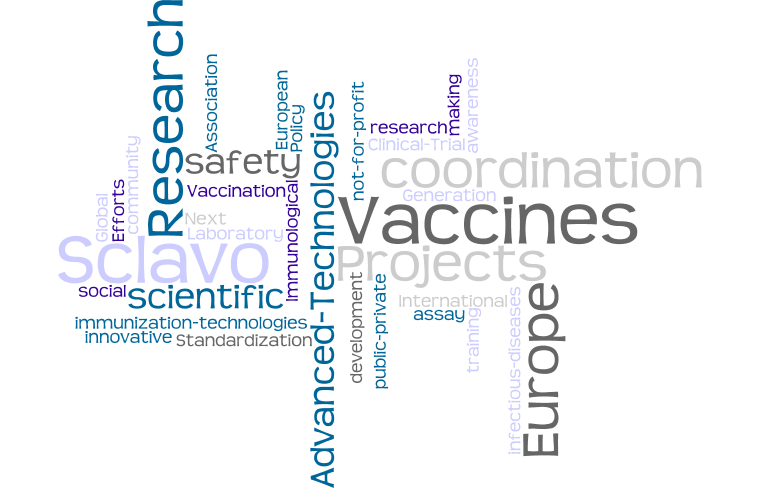
The Sclavo Vaccine Association (SVA) is a non-profit organization, involving 11 institutions from 6 countries, devoted to support vaccine research and development.
Based in Siena (Italy), where one of the first and most important centers in the world for vaccine vaccine development was started at the beginning of the 20th century by the visionary hygienist Achille Sclavo, the SVA is aimed at implementing an ambitious program for the development of next generation vaccines.
The sophisticated science behind the development of modern vaccines have become so complex that scientists and policy-makers need a new model for vaccine research. Today nobody can develop vaccines alone!
The overall aim of SVA is to advance the development of preventive and therapeutic vaccines, through the identification and application of novel technologies.
SVA also aims at enhancing European competitiveness in vaccine science by promoting innovation capabilities in the area of vaccines. Its activities are:
- Vaccine R&D, both for high and low income countries: by organizing and coordinating national and international scientific research and development projects involving multiple organizations from private and public bodies, as well as public awareness campaigns on vaccination
- Coordination of European Efforts in Vaccine R&D: by bringing together organizations in the vaccine area and accelerating the European Union’s efforts to develop safer and more effective innovative immunization technologies
- Standardization of immunological assays: by coordinating a project aimed at improving and standardizing the existing immunological assays, such as in the field of influenza vaccine
- Policy making: SVA is actively involved in policy activities relating to vaccination, by interacting with the social and scientific community at national and international levels.

Sclavo Vaccines Association Associate Members
11 institutions from 6 EU countries, link.
Project Coordinator
SVA has an outstanding experience in the coordination and management of EU projects, FP7 and H2020. Currently SVA is the Coordinator of 4 international research projects, link.